Held last 21st December, the Gabi ng Pasasalamat 2021 is a partner appreciation awards night by the Local Government Academy where the Moving Urban Poor Communities toward Resilience (MOVE UP) Mindanao Project, among other distinguished organizations, received a Partner Appreciation Certificate under the NextGen CapDev Accelerator Award at the Manila Hotel.
In recent months, the DILG-Local Government Academy capacity development initiatives such as webinar executive sessions for newly elected officials (NEO WES) and L!stong Ugnayan Sessions have served as avenues for the MOVE UP Mindanao Project, in collaboration with the Resilience and Innovation Learning Hub, to build capacities and advocate tested urban resilience strategies among local governments and other stakeholders.
This video was created as a part of the event’s virtual tour available to online attendees.
Given the context of continuously rising COVID-19 cases in the country and the immediate need to address hospitals’ surge capacity, the Moving Urban Poor Communities Toward Resilience (MOVE UP) Project, with its success in piloting and replicating alternative temporary shelter (ATS) systems as an urban resilience strategy, will build a 40-bed Community Quarantine Facility (CQF) in Malabon City from late May to mid-June. The CQF will help augment and increase the capacity of hospitals and other medical infrastructures in the area by servicing suspected cases and those with mild COVID-19 symptoms. The ATS System, originally intended to address the lack of dignified space and shelters for internally displaced families affected by disasters, can serve as base model for designing CQFs. MOVE UP, together with its technical partner for shelter United Architects of the Philippines – Emergency Architects (UAP-EA), intends to present replicable models built on practical design criteria (robustness, affordability, scalability, range of application, and speed of construction) for local government units (LGUs) and communities that need facilities for isolation and quarantine.
This video is the recording of the first-ever session of the Resilience Knowledge Exchange Series or RKES.
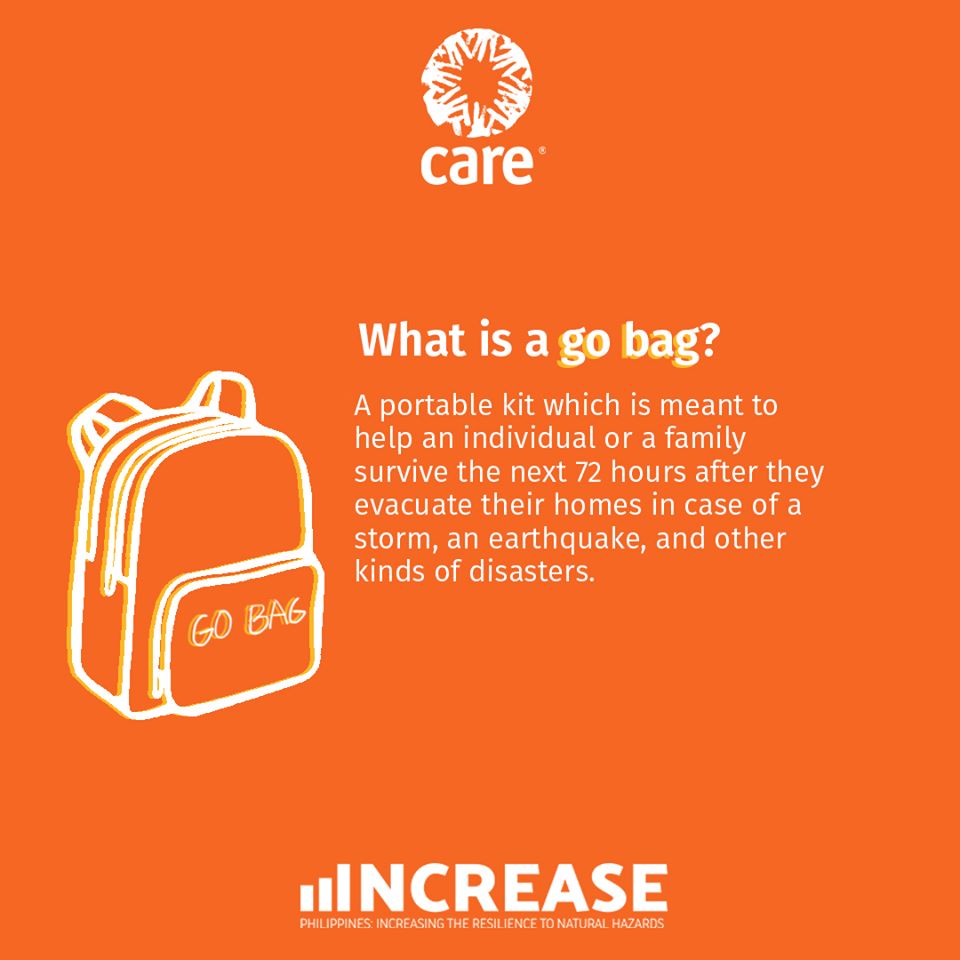
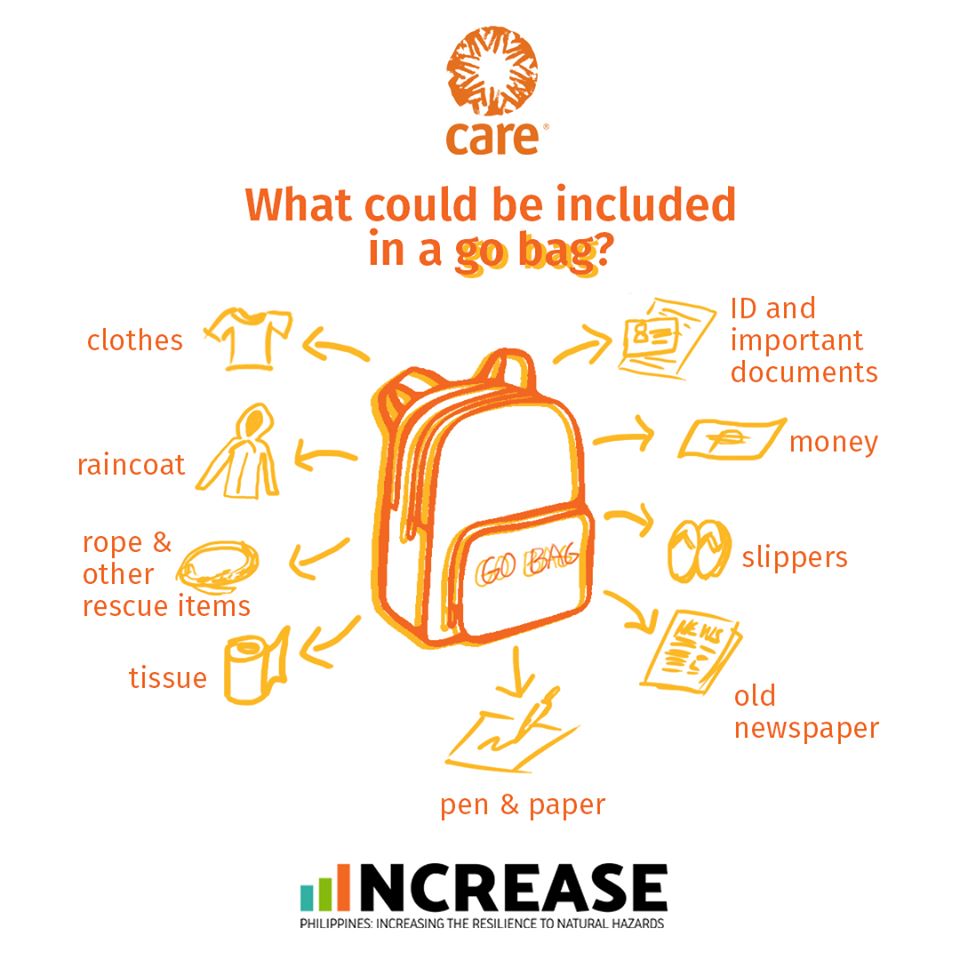
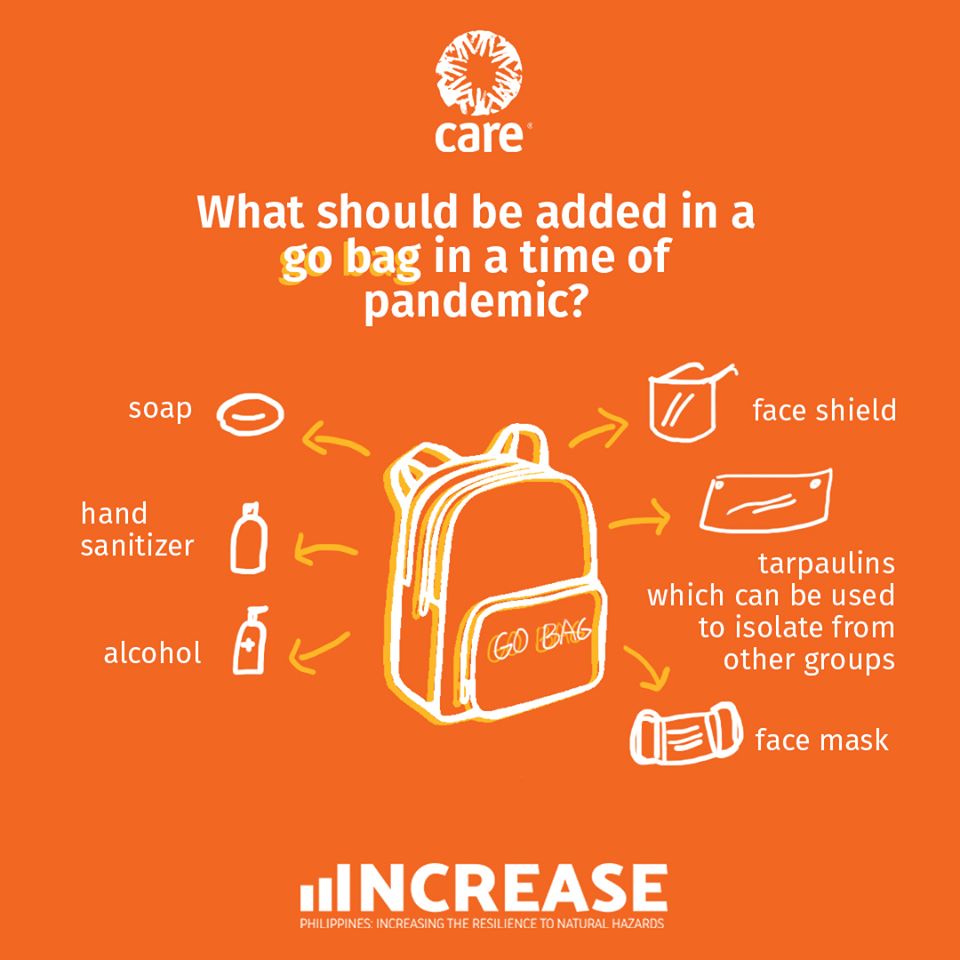
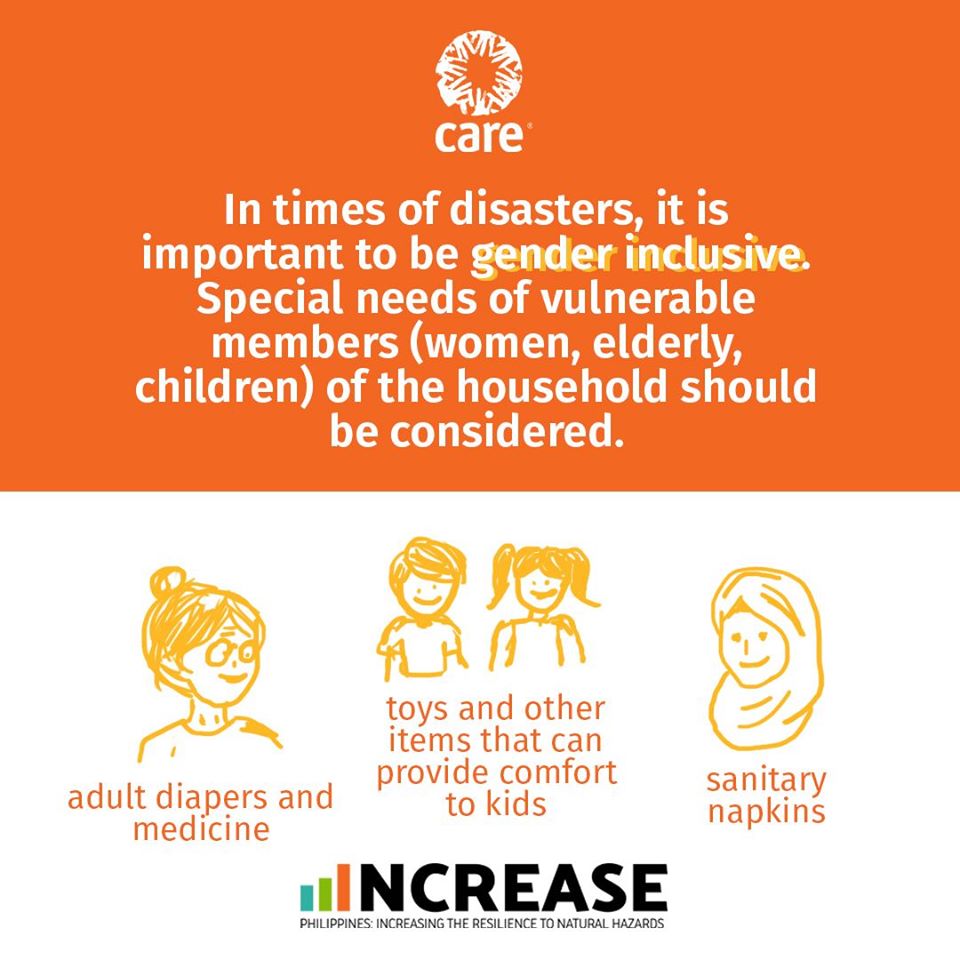
In the Philippines, a disaster can strike almost anytime. With a higher risk brought by pandemic, go bags or survival kits come in handy. While the usual inclusions of a go-bag should be prepared, water, sanitation, and hygiene (WASH) materials and gender-inclusive items should also be considered to make sure no one gets left behind when a disaster hits your community.
Check out these social media cards produced during this year’s National Disaster Resilience Month which had the theme “Sama-samang Pagsulong Tungo sa Katatagan sa Gitna ng Bagong Normal“:
Increasing the Resilience to Natural Hazards (INCREASE) aims to increase the resilience of 45,000 women and men small-scale farmers and fishers, including 720 extremely poor female-headed households, to natural hazards and the effects of climate change. It is implemented by CARE with support from the Skala Initiative and Phineo, in partnership with ACCORD Incorporated, Cordillera Disaster Response and Development Services, Leyte Center for Development, Inc. , and Agri-Aqua Development Coalition (AADC).
In 2013, Haiyan barreled across the Philippines and left destruction and massive loss on its path. Millions of people were affected, particularly poor communities, farmers, older persons, and persons with disabilities — those most vulnerable to extreme events such as Haiyan — and many have yet to fully recover and strengthen resilience.
Barangay Bayabas in the municipality of Dagami, Leyte, was almost flattened by strong winds. Apart from houses and structures, their livelihoods were wiped out as well.
But through humanitarian actions after Haiyan, followed by development projects, Barangay Bayabas was able to bounce back. Collective action played a big role: members of the community came together to form the Bayabas Farmers Association, which today has 64 members and four
different types of farms: communal, group, individual, and an organic learning farm. Members say their products are becoming popular.
Through these collaborative efforts, Barangay Bayabas is a community on its way to achieving a protected, diversified, and strengthened livelihood.
Disability inclusion is key in building truly inclusive and resilient communities. It requires addressing barriers that prevent persons with disabilities from engaging in community life, recognizing that these members can be active partners for meaningful change, and fostering an environment that empowers them to do just that.
In Dagami, Leyte, several locals with disabilities participated in ACCORD’s resilient livelihood program and ended up playing important roles in their communities.
Roger Ubaldo, 45 years old, a stroke survivor, had no other sources of livelihood after Typhoon Haiyan destroyed coconut trees. The different trainings on farming techniques and business management; however, helped him find alternative sources of income and he was eventually chosen to become their group’s sales distributor.
Adelaida Madalena Garsilaso, 50 years old, visually impaired since childhood, did not let her disability stop her from contributing to her community and is now a beloved teacher at Barangay Camono-an’s daycare center.
With their tenacity and strength of spirit, they broke barriers for themselves and helped their villages become more sensitive to the needs of persons with disabilities and their role in resilience building.
Safe and adequate shelter is an important factor an affected community needs to recover from a disaster.
In 2013, Typhoon Haiyan wiped out homes across Barangay Macaalang in the municipality of Dagami, Leyte. Many of these houses were far from sturdy and did not stand a chance against Haiyan. But through the collective action of community members, and CARE and ACCORD’s
program equipping the community with the necessary knowledge and skills to build back better and safer, Barangay Macaalang was able to rebuild in no time.
“ACCORD advised us to group together to make the rebuilding easier. If we do it individually, it will take a long time,” says Helena Olimpo, barangay councilor. The community received shelter assistance and materials. Apart from learning about how to build back safer, they also participated in other capacity building activities such as understanding hazards and disaster risk reduction, inclusion, and community drills based on their revised contingency plan.
The “Post-Haiyan Self-Recovery Housing Program” in Leyte, Iloilo, and Aklan was one of the winners of the 2017 World Habitat Awards.
Manila Bay is strategically located and used to facilitate commerce and trade with other neighboring countries. In its heyday, the bay was known for clean and blue water where people could fish and children could play along the shore. It also used to be filled with mangroves, thus capable of protecting the shore from big waves. Today, however, Manila Bay has become quite the opposite as it is mostly known for intense pollution and unsanitary water.
Due to the increasing population, many of the urban poor communities live in or near the coastal areas. Because these vulnerable populations have limited resources, many people cram into these areas and result to high-risk living conditions with the general housing of community made of only lightweight materials.
The Malabon-Navotas-Tullahan-Tinajeros or MANATUTI River System is one of the three river groups draining into Manila Bay. MANTUTI has been classified as a dead river and can no longer sustain forms of life which affect the quality of life of the fisherfolk near these bodies of water. They have to travel to distant waters in order to catch fish, hence increasing their expenses and reducing income. Aside from this, the communities who reside in areas, such as those by Manila Bay or its comprising river systems (usually informal settlers) are most prone to flooding, fire, storm surges, liquefactions, and earthquakes which are expected to be intensified in the next five to ten years due to climate change.
The Manila Bay Rehabilitation Program is simultaneously ongoing with the Manila Bay Sustainable Development Master Plan which is a joint effort of the Philippine government and the Netherlands Government. The latter serves as more of a guide on how future plans for Manila Bay will be carried out, however it is a mere guide that does not have the teeth to enforce its provisions. This is where Partners for Resilience (PfR) steps in. PfR aims to harmonize the process of planning, particularly since one main challenge of large areas such as Manila is that there are simply too many plans.
In Voices of Manila Bay, resilience-building efforts for not only the local government unit officials, but also of the community members themselves through joint and inclusive initiatives and platforms are featured. Through PfR, people from these communities, as well as members of the local government were given an opportunity to create consultations and discussions about their natural environment, their surroundings, their vulnerabilities, and their capacities in order to form a stronger mindset and clearer perspective on the situation. Eventually, this was able to inform the plans and decisions they made for community resilience.
Without PfR, many of the small but most vulnerable communities would not have any idea that there is an ongoing planning and development process for Manila Bay. Therefore, they would not have a chance to share their grievances, inputs, and aspirations about what they want for Manila Bay as the most affected population.
As a whole, this film aims to encourage a dialogue around the participation of communities and local stakeholders in large infrastructure development projects.
To see the full film, please watch the video below.
With each passing year, the frequency and severity of natural hazards is increasing. Coupled with a changing climate and severe environmental degradation, the disaster risks faced by communities living in extremely vulnerable conditions are only magnified.
In 2011, a five-year program, Partners for Resilience (PfR), funded by the Dutch Ministry of Foreign Affairs was conceptualized. The project aimed at reducing the impact of natural hazards on the livelihoods of around 400,000 vulnerable people in Ethiopia, Uganda, Kenya, Mali, Indonesia, India, the Philippines, Nicaragua, and Guatemala.
The implementation of PfR was undertaken by a consortium of five partners, namely Netherlands Red Cross (lead agency), CARE Nederlands, Cordaid, Red Cross/Red Crescent Climate Center, and Wetlands International. It is the fundamental belief of the five partners that resilience plays an essential role in dealing effectively with disasters.
Partners for Resilience used an integrated approach to mitigate disaster risks and enhance livelihoods, particularly by addressing climate change and ecosystem management and restoration.
In this PfR video, vulnerable communities in the provinces of Bihar and Odisha, India were engaged through improving the management of natural capital and diversifying livelihood options or building livelihood resilience by introducing communities to flood resilient technologies for agriculture and diversified livelihood opportunities including mushroom cultivation, pisciculture, and the formation of Self-Help Groups.
PfR also increases disaster preparedness by being actively involved with the government in formulating district-level disaster management plans in which ecosystem and climate change approaches are incorporated in order to not only foster the people’s resilience, but also to the build capacities of the community and the district. Other undertakings of the PfR program such as Village-Level Risk Reduction Plans and Village-Level Disaster Reduction Committees (VLDRCs) are also featured in this video.