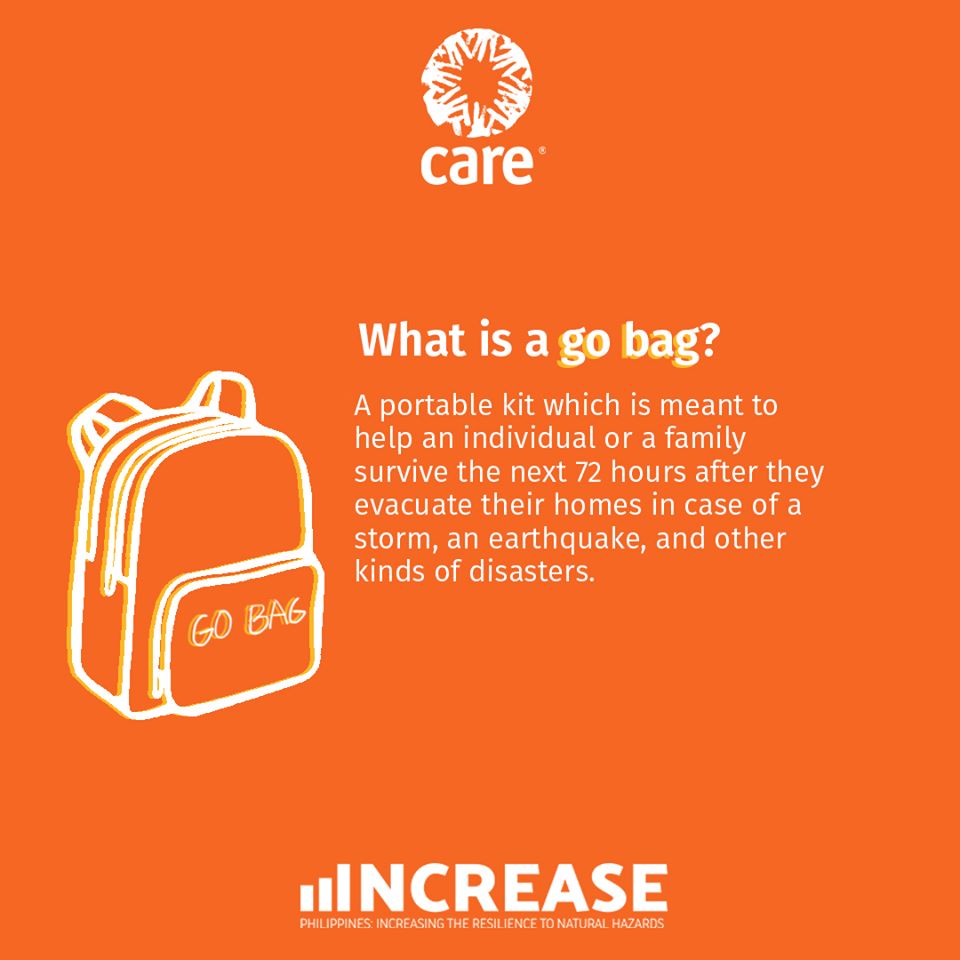
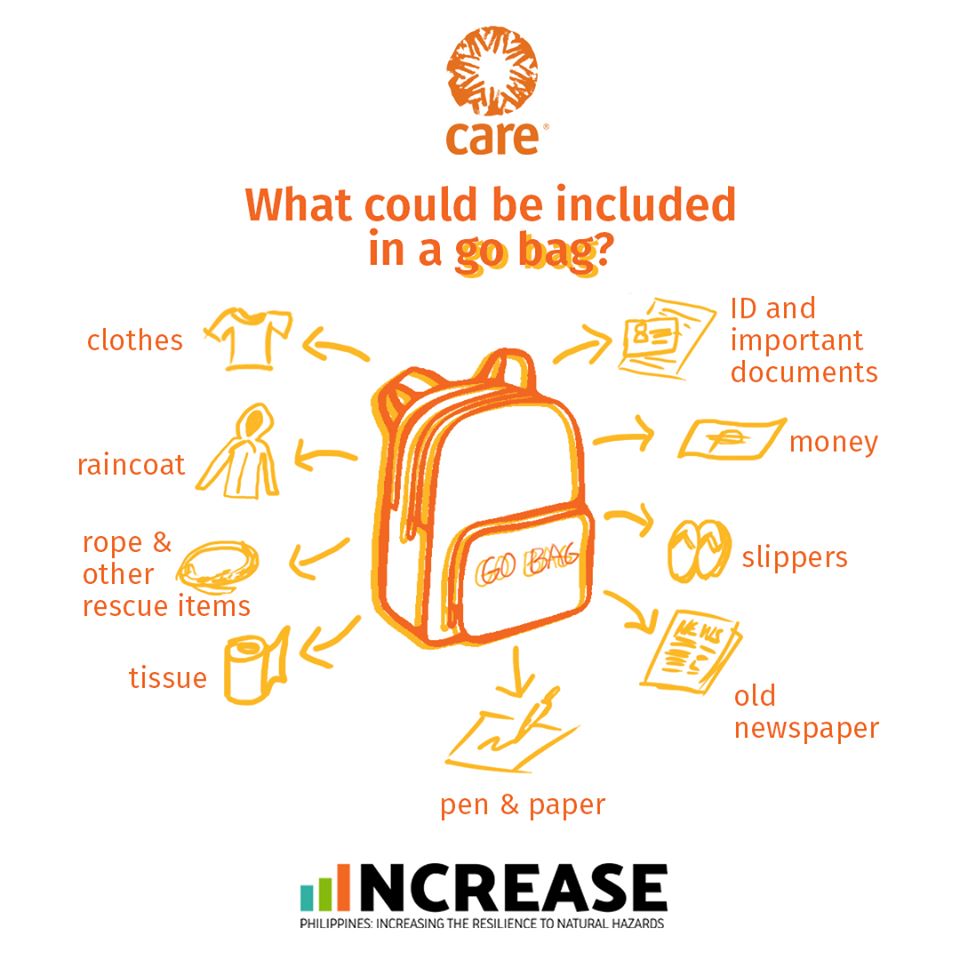
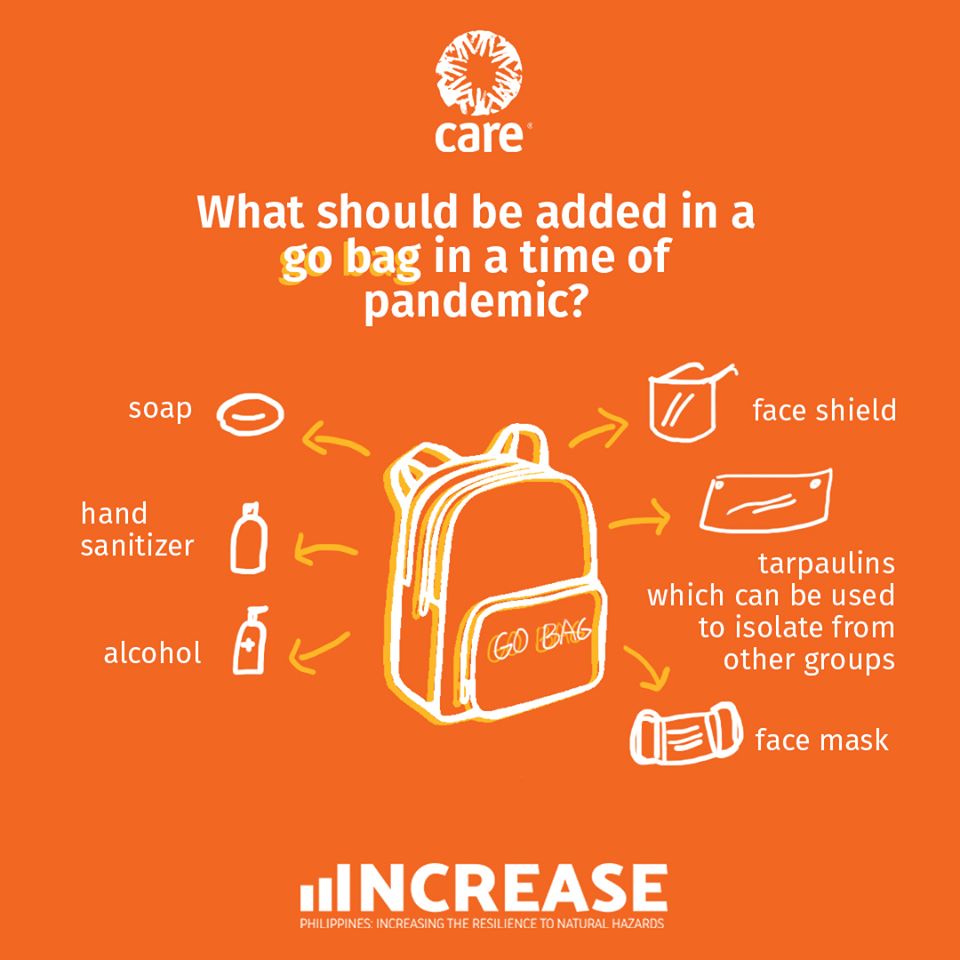
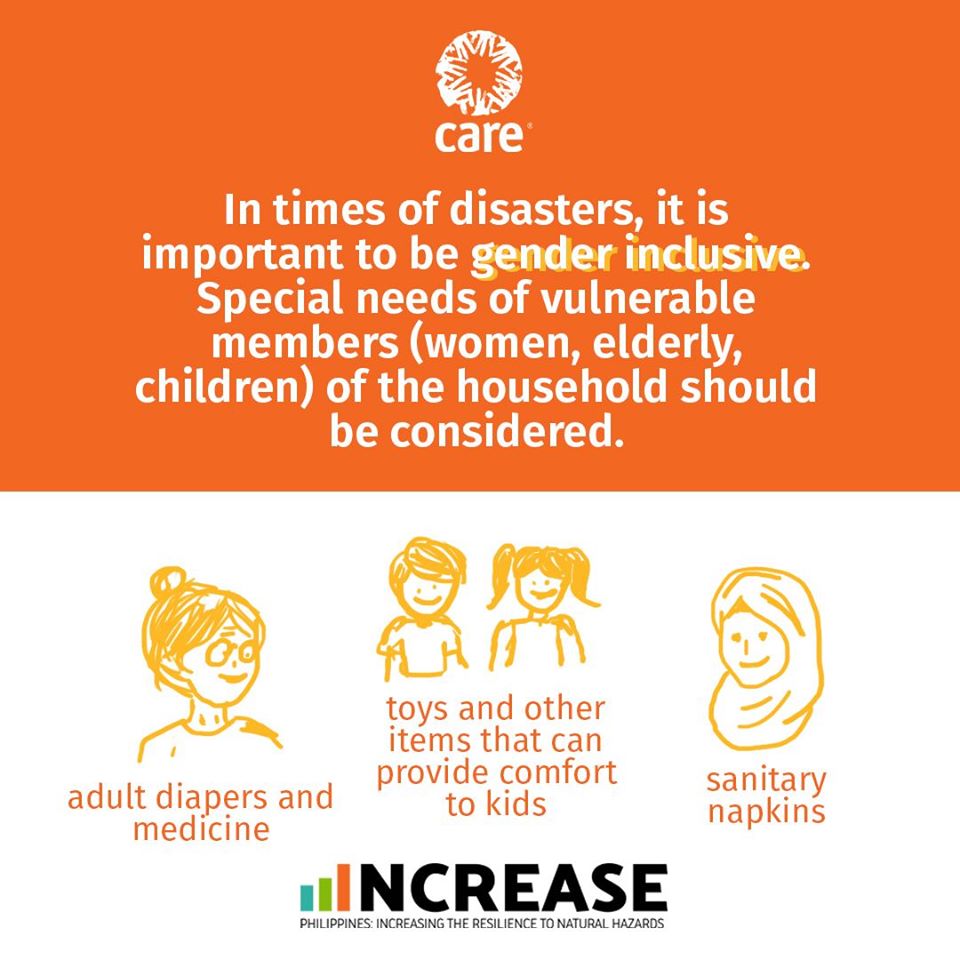
In the Philippines, a disaster can strike almost anytime. With a higher risk brought by pandemic, go bags or survival kits come in handy. While the usual inclusions of a go-bag should be prepared, water, sanitation, and hygiene (WASH) materials and gender-inclusive items should also be considered to make sure no one gets left behind when a disaster hits your community.
Check out these social media cards produced during this year’s National Disaster Resilience Month which had the theme “Sama-samang Pagsulong Tungo sa Katatagan sa Gitna ng Bagong Normal“:
Increasing the Resilience to Natural Hazards (INCREASE) aims to increase the resilience of 45,000 women and men small-scale farmers and fishers, including 720 extremely poor female-headed households, to natural hazards and the effects of climate change. It is implemented by CARE with support from the Skala Initiative and Phineo, in partnership with ACCORD Incorporated, Cordillera Disaster Response and Development Services, Leyte Center for Development, Inc. , and Agri-Aqua Development Coalition (AADC).
There are several assumptions about COVID-19 – how it can be spread, how it can be it be killed, among others. Apart from keeping our social distance and maintaining our health, we must also be fully informed about what COVID-19 is in order to assure that we can act and react best based on accurate facts about the virus.
Below is a set of social media cars covering myths about COVID-19.
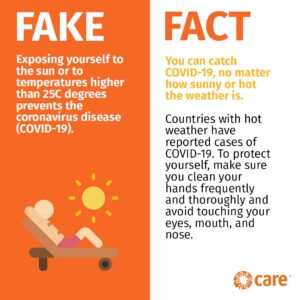
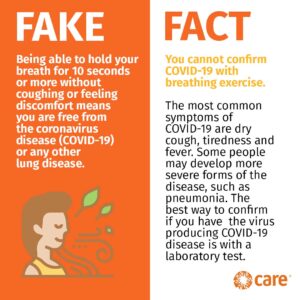
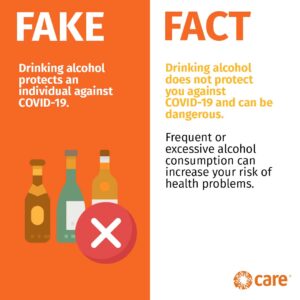
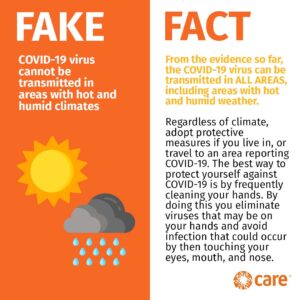
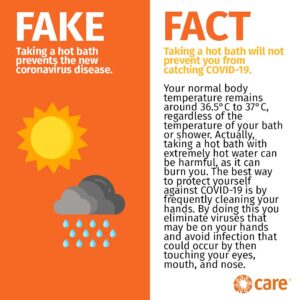
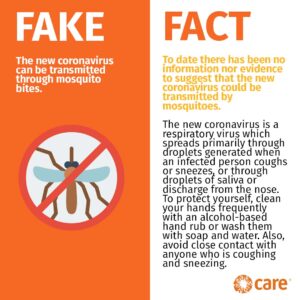
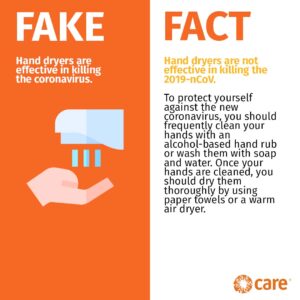
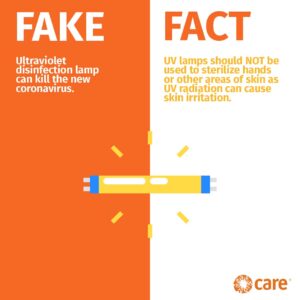
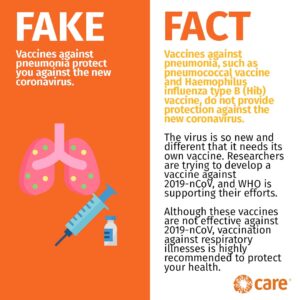
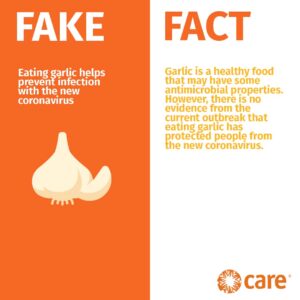
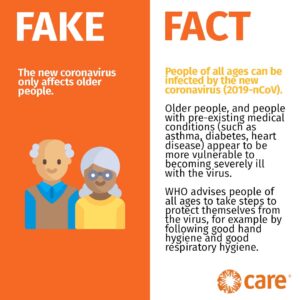
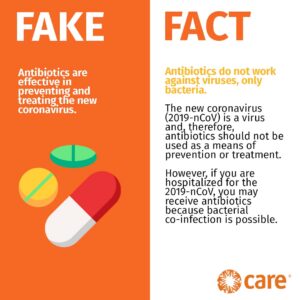
The information featured in these designs was sourced from the World Health Organization.